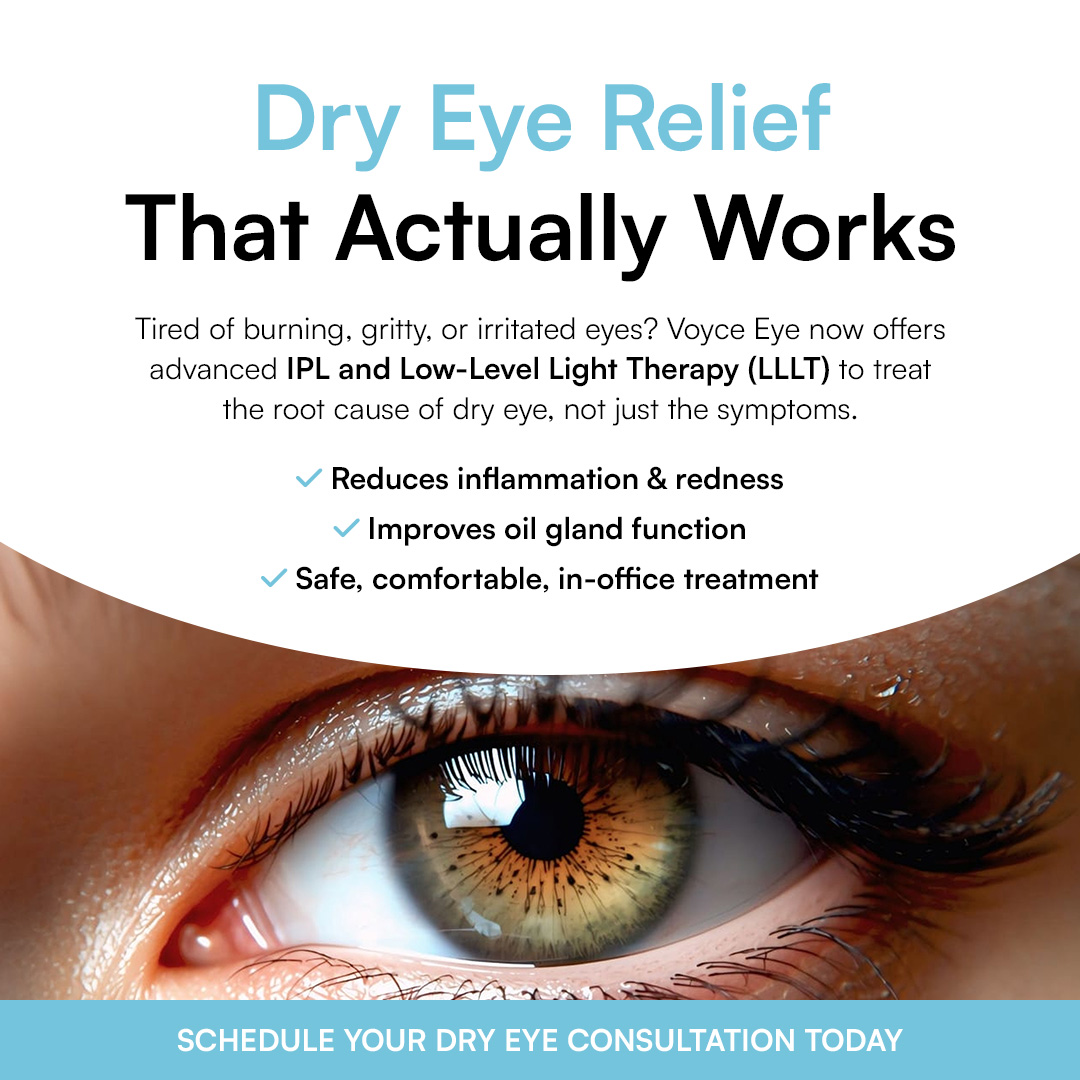

Dry, burning, gritty eyes are often blamed on a lack of tears. However, many cases of dry eye disease actually begin in the eyelids. Meibomian gland dysfunction, commonly called MGD, affects the tiny oil-producing glands along the eyelid margins and is one of the most common contributors to evaporative dry eye.
At Voyce Eye, we evaluate the underlying cause of dry eye symptoms so patients in Newnan can receive treatment based on what their eyes need.
The meibomian glands produce oils that form the outer layer of the tear film. This oily layer helps prevent tears from evaporating too quickly and keeps the surface of the eye comfortable and protected.
When these glands become blocked or do not release healthy oils, tears can evaporate faster than normal. The result may be ongoing irritation even when your eyes appear watery or you regularly use artificial tears.
MGD can develop gradually, which is why some people experience symptoms for months or years before realizing their eyelids may be contributing to the problem.
Symptoms of MGD can overlap with other forms of dry eye disease. An eye evaluation can help determine whether poorly functioning oil glands are part of the problem.
Common signs may include:
If these symptoms keep returning despite using over-the-counter eye drops, it may be time to look more closely at the health of your eyelids and tear film.
Effective dry eye treatment starts with identifying what is causing the tear film to become unstable. During a dry eye evaluation in Newnan, we can examine the eyelid margins, tear quality, tear evaporation, and meibomian gland health.
Specialized imaging such as meibography allows us to evaluate the structure of the meibomian glands. Additional testing can help us assess inflammation, tear film stability, and changes on the surface of the eye.
This information helps us distinguish MGD from other causes of dry eye and develop a more personalized treatment approach.
When MGD is contributing to dry eye, simply adding more moisture may not address the source of the problem. Treatment may focus on improving eyelid hygiene, supporting healthier oil production, reducing inflammation, and helping blocked glands function more effectively.
Depending on your examination findings, treatment may include at-home care, prescription therapies, eyelid cleaning, or in-office dry eye treatments designed to address gland dysfunction. The right approach depends on the condition of your meibomian glands, the severity of your symptoms, and other factors affecting your tear film.
If persistent dry eye symptoms may be starting in your eyelids, schedule a dry eye evaluation with Voyce Eye in Newnan, GA at (678) 818-4400 to find a treatment plan focused on the source of your discomfort.
Flowbite is an open-source library of interactive components built on top of Tailwind CSS including buttons, dropdowns, modals, navbars, and more.
Check out this guide to learn how to get started and start developing websites even faster with components on top of Tailwind CSS.

Find personalized eye care excellence with our comprehensive services. From eye exams to advanced diagnostics, trust us for all your vision needs.

For non-urgent questions or to learn more about our services, contact us today!

© 2026 Voyce Eye. All rights Reserved - Accessibility Statement - Privacy Policy - SMS Terms of Service - Sitemap
Managed and Designed by 